Key Learning Areas
At Warrnambool College, we believe that every young person deserves the opportunity to succeed. Our vision for learning places students at the centre of every decision we make. We are committed to understanding and responding to each learner’s unique needs, inspiring them to become motivated, capable and lifelong learners. This commitment is grounded in the noble cause that every Warrnambool student thrives, and it begins with high-quality, evidence-based teaching in every classroom.
The Foundation Of Our Approach:
Our curriculum and assessment approach is guided by the Victorian Teaching and Learning Model 2.0 (VTLM), which provides a research-based framework for how students learn best and how teachers can support their learning. Drawing on these evidence-based practices, each Key Learning Area remains responsive to student needs through a focus on what students learn, how they learn it and why it matters. We embed strategies that help students build attention, focus and memory – supporting students to achieve mastery over time and apply their learning in real-world contexts. In our classrooms, all teachers ensure that their learning programs:
-
- Manage cognitive load.
- Activate prior knowledge and model new content.
- Provide opportunities for practice, feedback and reflection.
Foster self-regulation in a positive, inclusive learning environment.
Our Prospectus
Our Subject Prospectus provides students and families with a clear overview of the learning opportunities available at the College. The site outlines each subject, including course content, skills developed, assessment approaches, and pathways for future study and careers.
Designed to support informed subject selection, the Prospectus helps students explore their interests, understand expectations, and plan a program that aligns with their goals and strengths.
To explore the full Subject Prospectus and learn more about the opportunities available, please visit the link below to access the complete guide.
Key Learning Areas
English
Across every year level, our program is united by a shared commitment to growth, connection and opportunity. We nurture confident, capable learners by creating engaging experiences that reflect the unique spirit of each stage of schooling, from building strong foundations, to exploring identity and pathways, to preparing for future success.
At the heart of this journey is a relentless focus on literacy growth. We believe literacy is the gateway to learning, voice and opportunity. Through explicit teaching, rich learning experiences and high expectations, we empower students to read critically, write with clarity, speak with confidence and think deeply across all subject areas.
Each year level program is intentionally designed to be supportive, challenging and purposeful, fostering independence, resilience and aspiration. Together, they form a cohesive pathway where every student is known, valued and equipped with the skills they need to thrive at school and beyond.
Literacy
At our school, we believe every student can thrive. Our Literacy Program is designed to support and empower each learner by tailoring sessions to meet individual needs.
Our dedicated Literacy Team works with small groups and individual students to provide targeted support in key areas, including spelling, reading comprehension, reading fluency, and writing. We use evidence-based programs and proven instructional strategies to ensure students receive high-quality, effective intervention.
In addition, the Literacy Team supports students in completing assessment tasks, helping them build confidence, develop skills, and experience success in their learning journey. Our goal is to ensure every student feels capable, supported, and proud of their progress.
Maths
Our Mathematics program is designed to support, challenge and extend every learner across all year levels, building strong foundations and clear pathways for future success.
In Years 7–9, students engage in core Mathematics classes that are carefully differentiated to meet individual learning needs, alongside our SEAL program which provides additional extension for high-achieving students. This ensures all learners are appropriately supported and challenged as they develop essential numeracy skills and mathematical thinking.
In Year 10, classes are streamed to cater for different interests, abilities and future pathways, allowing students to select a course that best aligns with their goals and prepares them for senior study.
At VCE level, we offer four different Mathematics options, providing clear and flexible pathways to university, TAFE and the workforce. This range ensures students can pursue a course that supports their strengths, interests and post-school aspirations.
Across all levels, our program incorporates a variety of task styles to suit diverse learners. Learning is grounded in real-life scenarios, helping students see the relevance of Mathematics beyond the classroom while building problem-solving skills, critical thinking and confidence.
Numeracy
Our Numeracy program is designed to ensure every student in Years 7-10 is supported to build confidence, competence and independence in their mathematical skills. Through a combination of targeted classroom support and specialised intervention programs, we work to meet students at their point of need and accelerate their growth.
We offer a range of evidence-based numeracy interventions, including WININ (What I need in Numeracy), GRIN (Getting Ready in Numeracy), and the 10 A+ Apprenticeship Program. Each of these is tailored to strengthen foundational skills, reinforce key concepts and develop problem-solving strategies in an engaging, relevant context. These programs provide structured, small-group support while maintaining strong links to classroom learning.
By combining targeted intervention with high-quality classroom instruction, our Numeracy approach ensures students are equipped with the essential skills they need to succeed across all subject areas and in everyday life.
Science
In science, we aim to support students’ inquisitive thinking about how things work in the world involving people, plants, animals, bacteria and the greater universe. Our science classrooms are a mixture of the theoretical knowledge being supported by practical activities and experiments to consolidate understanding and application of processes used in the real world throughout a range of careers. Throughout the years, students will develop an understanding of how scientists research in ethically acceptable ways to further develop the understanding of human knowledge.
From Years 7 until 9, students follow a core science structure, gaining breadth in the various science strands and topics, meanwhile SEAL students do this with extension and involve integration of these topics in challenges such as the Science Engineering Challenge.
In Year 10, students choose at least two science strands to delve deeper into, which includes choices of the major strands (Biology, Chemistry and Physics) along with everyday science ideas such as ‘Science and the Real World’. Students who meet the requirements for an early VCE subject could choose Year 11 Psychology in Year 10.
VCE Science offerings include Biology, Chemistry, Physics and Psychology. In each of these, the content is linked to real-world scenarios and especially supports those students wanting further education or a career in the sciences.
Health & PE
Health and Physical Education plays a vital role in developing the knowledge, skills and confidence students need to lead active, healthy lives – not just during their school years, but well into the future. By promoting lifelong health and physical activity, our program empowers students to make informed choices that support their physical, mental and social well-being.
Through a range of practical and theory-based learning experiences, students build far more than fitness. They develop essential life skills including teamwork, communication, leadership and effective decision-making. Working collaboratively in team environments strengthens their ability to problem-solve, show resilience and respect diverse perspectives.
Health and PE equips students with the tools to take ownership of their wellbeing, build positive relationships and contribute confidently to their communities – laying the foundation for lifelong success both on and off the field.
Humanities & Language
The Humanities program at Warrnambool College is designed to develop students’ ability to think critically, analyse information, and apply their learning to real-world situations. Our curriculum covers history, geography, civics, and economics, ensuring students engage with key concepts that shape societies, economies, and environments. We emphasise big ideas, and essential questions, encouraging students to explore the past, understand the present, and consider the future.
The Languages program at Warrnambool College offers French and Indonesian, providing students with the opportunity to develop practical communication skills while deepening their understanding of global cultures. Our curriculum is designed to help students speak, read, write, and listen in a second language with confidence, while also fostering an appreciation for the cultural and historical contexts that shape language use. We aim to make language learning engaging, relevant, and transferable, ensuring students see it as a valuable skill that extends beyond the classroom.
The Arts & Technology
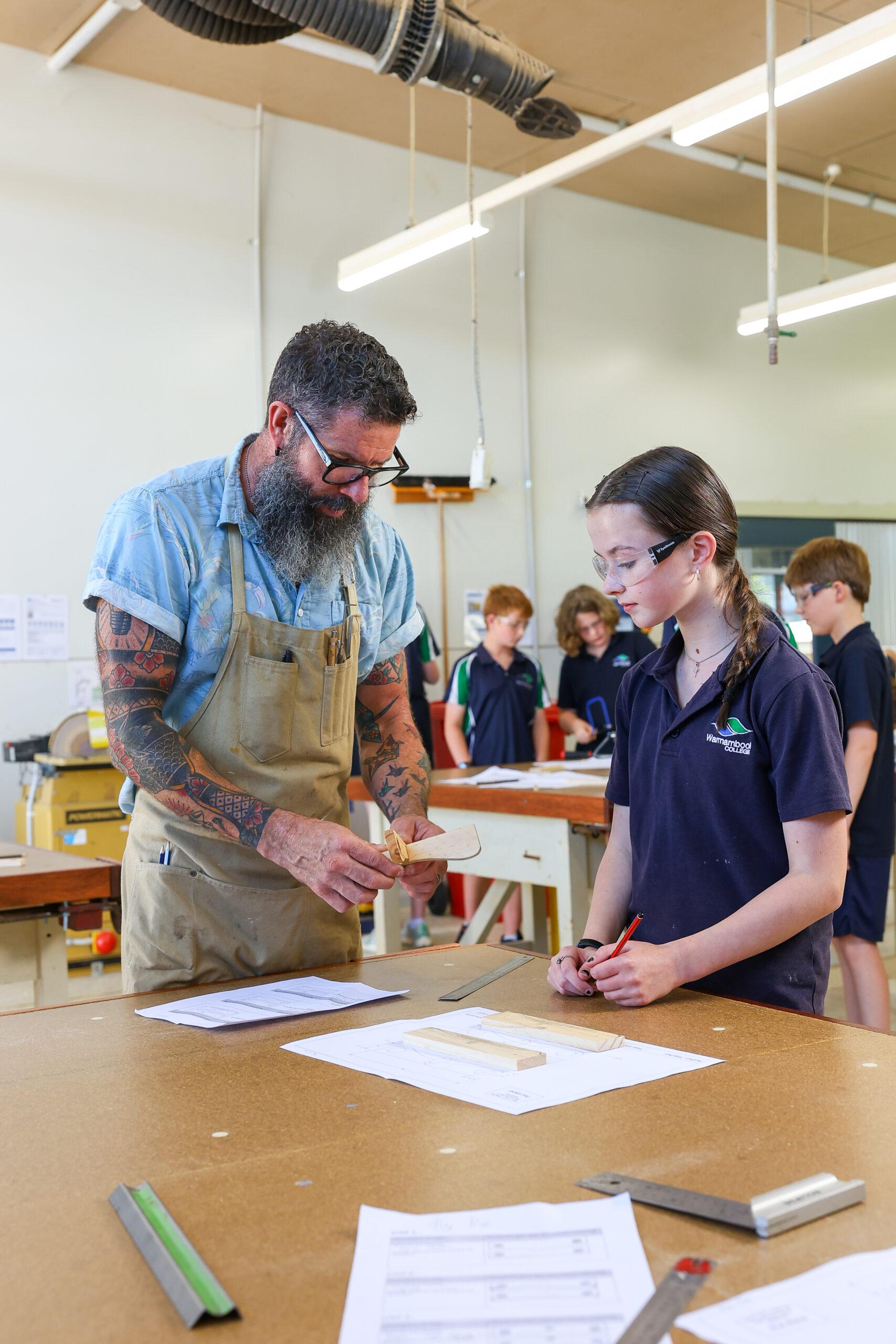
The Arts and Technology learning areas provide students with rich opportunities to explore creativity, innovation and design thinking in purposeful and practical ways. Through subjects including Art and Design, Drama and Theatre Studies, Music, Photography and Media, Visual Communication, Architecture, Food Technology, Digital Technology, Digital Systems, Product Design (Wood) and Fabrics, students are encouraged to express ideas, solve problems and bring concepts to life.
Creativity sits at the heart of these programs. Students learn to think critically and imaginatively, developing skills in collaboration, communication, planning and refinement. Whether performing on stage, designing a product, composing music and art, creating digital solutions or working with textiles and food, students engage in hands-on learning that builds resilience, adaptability and confidence.
The Arts and Technology classrooms are spaces where ideas are tested, refined and celebrated. Students develop practical and technical skills alongside creative thinking, preparing them for further study, future careers and a world that increasingly values innovation and design.